Traffic studies
Two important reports of consultations on travel and transport have recently been published, the Hampstead Streets for People survey on 21 November and the Co-Design Engagement report for the Dartmouth Park Healthy Neighbourhood (DPHN) on 28 November. The DPHN had attracted very many responses and sensibly Camden “sent it back to the drawing board” in March 2025. This DPHN report simply summarises the consultation results and does not cover any redesign that may be contemplated or in progress, as a consequence of the comments received. This report represents a preliminary review.
Hampstead Streets for People
Hampstead Streets for People published the results of their survey which attracted 560 responses and 2,300 comments. The approach for this study was to ask residents what they liked and disliked about the neighbourhood and contrasts with the approach adopted for the DPHN co-design which started with specific draft proposals for traffic management and other topics on which comments were requested.
The summarised Hampstead project results were:
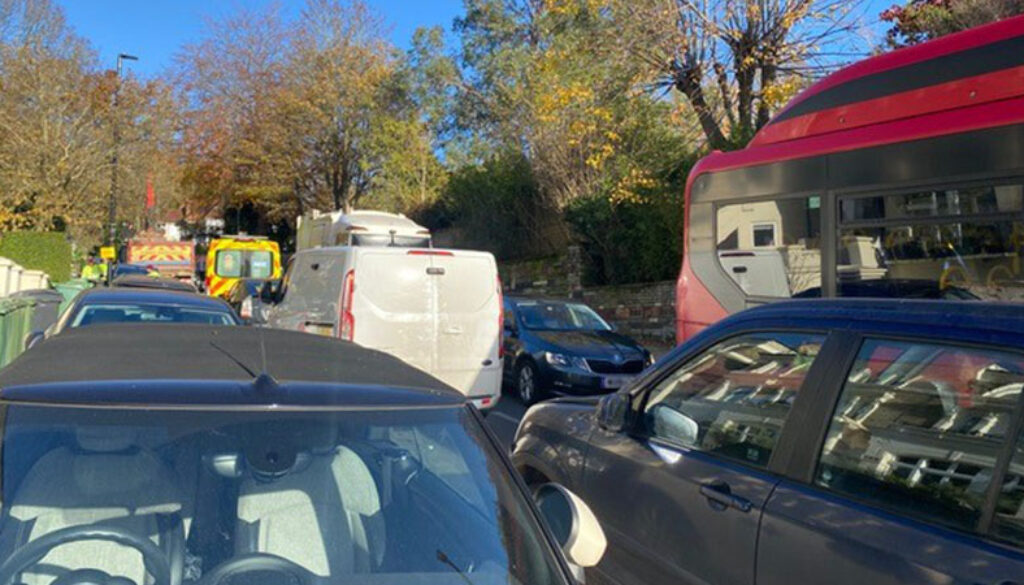
- Traffic is the biggest concern, with 93% of respondents wanting change. The most common priorities are reducing overall traffic volumes, tackling congestion hotspots, and making streets safer.
- Walking is the primary way people get around, but many feel that pavements are cluttered, crossings are inadequate, and illegal pavement riding by mopeds and e-scooters is a growing problem.
- Public transport could be improved, particularly with better east-west bus connections and more reliable services to reduce car dependency.
- Car use remains important for some, especially for disabled residents, who raised concerns about parking availability and accessibility.
- Views on cycling and e-bikes were divided – while some support improvements such as protected cycle lanes, others expressed concerns about pedestrian safety and the impact on those with impaired mobility.
- Biodiversity and green spaces matter, with “trees” being by far the most chosen word to describe what is liked about Hampstead’s streets.
While different residents will have different views, our expectation is that a similar study and survey in the Highgate and Dartmouth Park areas might obtain similar conclusions.
The Hampstead Study will now move on to developing:
- Design toolkit– listing over 50 types of street intervention, showing local examples and indicating which are most suited to the Hampstead & Frognal area, based on the views received.
- Traffic analysis– to show traffic flows along key roads, where vehicles have come from and where they go.
Dartmouth Park Healthy Neighbourhood (DPHN)
Camden and Islington’s DPHN study covering the Camden side of Highgate as well as Dartmouth Park adopted a different approach with more limited consultation before the publication of specific proposals for:
- A local traffic management plan
- Road safety, bus priority and cycle network improvements
- Improvements to local streets
The DPHN proposals published in July 2024 were set out over 23 pages, and were accompanied by a Commonplace questionnaire with 35 questions including those on the background of the respondent, how they travelled and where they lived. Many residents will have felt that the questionnaire didn’t ask the right questions, and probably as a consequence there were 781 emailed responses in addition to 1,257 questionnaire responses. (There will have been some overlap between the two categories.)
Many Highgate residents were concerned that there was almost no recognition of the Haringey side of Highgate. Residents of the Highgate (Haringey ward) had no box to tick for their response, and the lack of involvement and consideration of Highgate (Haringey ward) traffic issues emerges as a theme in the co-design engagement report. The cross borough Highgate Neighbourhood Plan and Forum which has a statutory basis and was adopted following a local referendum was ignored with the new DPHN area.
The co-design consultation report is considerably more polished than the original proposals and comprises 73 pages, not including appendices (which do not yet seem to be attached). It summarises the results obtained through the questionnaire and themes from emailed responses of residents. The most interesting and wide ranging responses are those submitted by email which were not constrained by the questionnaire.
Typically a report such as this would include a section with comments from interested amenity groups, the neighbourhood forums, resident associations and other groups with an interest. This is not included and seems a serious omission because these groups can represent the views of their members and to some extent balance competing and conflicting priorities. Apart from the Highgate Society, other groups whose views could usefully have been summarised include each of the 19 other civic groups, and resident and tenants associations that are members of the DPHN Joint Action group. The only reference to the Highgate Society is in Table 23 at the end of the report which is a summary of our public meeting in September 2024, probably the most significant engagement event that took place.
There is no attempt to draw any conclusions from the consultation, nor are the proposals developed at all. However, since release of the report the local Highgate (Camden) Labour councillors have issued a statement on 29 November 2025 which says: “Camden’s position has not changed since March – they will not be proceeding to consultation with the scheme that was proposed, and the project has gone completely back to the drawing board.” Hence any new proposals could reasonably be expected to be different to those brought forward last year.
The questionnaire responses
Respondents were asked about how they travelled, and at section 2.9 the report states that 71% of respondents have access to a car noting that this is higher than in Camden or Islington boroughs as a whole. As a consequence the report suggests that car drivers are overrepresented in the responses.
However, a more relevant comparison would be in relation to car access of residents in and around the DPHN scheme area who were the target group of respondees, where almost certainly car ownership would be higher than in the boroughs as a whole which both include more central London areas. The original scheme proposal includes maps of car ownership by area within DPHN. Car ownership rates vary widely between about 10% and 90%, and seem to depend on proximity to public transport.
Car ownership data is provided in the introduction to the responses obtained to many questions in the questionnaire suggesting that the statistic is considered important in interpreting the results. However, similar statistics, for example on each question have not been provided for cyclists, who comprise 39% of responses. In any case, the categorisation approach is too simplistic: many people walk, cycle, drive or take public transport depending on the journey, and one journey will often involve more than one mode of transport.
The way the results are presented provides little insight on where the weight of opinion lies, so for example on page 23, both “general opposition” and “general support” for the traffic management plan are listed without any further evaluation.
In a few cases, based just on numbers of bullet points listed, one could conclude that respondees felt for example that public transport would be negatively impacted, but little else has a clear conclusion.
The questionnaire allowed for other comments to be included in narrative form and the most useful section from the questionnaire responses summarises these as follows:
- Concerns that the engagement period was insufficient.
- Concerns that the proposal was not presented in a clear manner for all to understand.
- Concerns that the proposal would be a misuse of council funds.
- Comments that the proposal should have been accompanied by traffic modelling and other relevant data.
- Comments that the proposal should have been coordinated with Haringey Council.
Emailed engagement responses
Emailed responses are naturally harder and more time consuming to summarise, but the report attempts to do so, in table 22 in section 3.52. The comments were overwhelmingly negative towards the proposals. We are continuing to analyse this section of the DPHN Co-design Engagement report.
Links to the full reports
The full results of the Hampstead Streets for People study are available at:
The DPHN engagement report is at: